


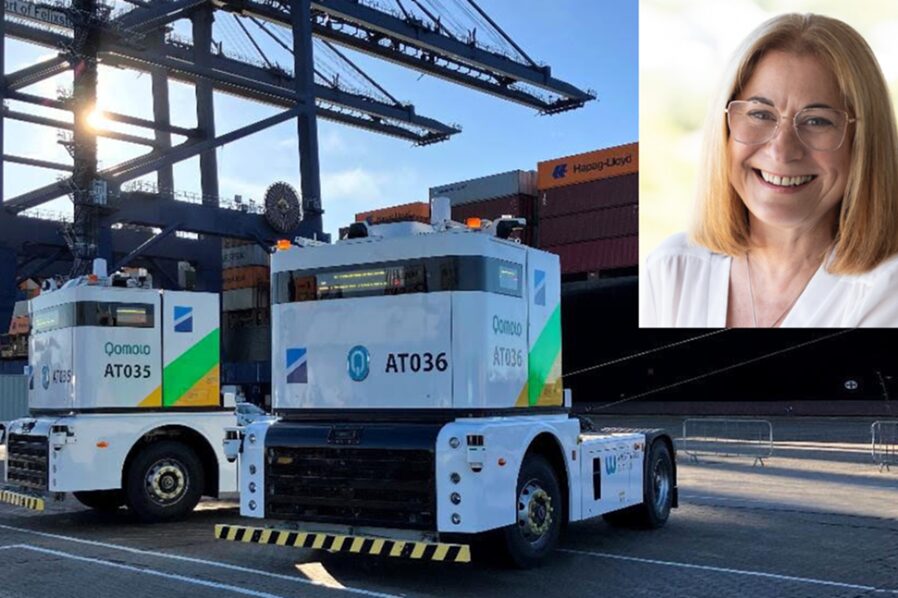
When people picture the future of logistics, they often imagine a landscape dominated by autonomous vehicles and AI-run supply chains. But a visit to the Port of Felixstowe by Becky Crevald of A&S Recruitment highlighted that the reality is far more nuanced. Becky explains: “In our daily recruitment endeavours, we are seeing how technology is accelerating, but, as I saw first-hand at the port, humans remain central to every innovation, shaping, supervising and improving the systems that keep goods moving.
“My visit to the port, which was part of an invitation by Hive Connect, perfectly demonstrated this human–technology partnership in action. At Felixstowe, up to 4,000 lorries a day now pass through biometric gate access systems using advanced booking. The ease and seamlessness of this process is such that it almost looks like magic. But all this flowing automation is down to the micro-decisions of planners, software specialists and operations teams, all of whom truly understand the issues and who work together to eliminate bottlenecks.”
The same blend of foresight and automation underpins the port’s smart yard planning system. Before a truck has even arrived, priority containers are already moved to the top of the stack, reducing unnecessary digging, improving turnaround times and cutting fuel waste. Becky continues: “Algorithms handle the orchestration of these manoeuvres, but it is people, the planners and operators, who determine the priorities and manage those curveballs that no data model can fully predict. People who can see the whole picture will always be needed, especially when the unexpected happens.”
Meanwhile, autonomous trucks navigate the terminal using LiDAR, GPS and AI, coexisting with human-driven vehicles and learning from their behaviour. Each day, they accumulate “data hours” that refine their performance. “They’re not replacing drivers,” says Becky, “they’re learning from them. Humans set the standard that the AI must meet.
“These technological shifts are not just reshaping operations, but the entire logistics recruitment landscape. Employers are now recognising that their future workforce needs to blend traditional operational skills with digital literacy, data awareness and adaptability.
“Recruitment strategies are shifting accordingly: companies are using competency-based assessments to identify candidates who can learn new systems quickly; they’re hiring IT specialists directly into operations teams; and they’re reskilling existing staff to bridge the gap between mechanical know-how and software-driven diagnostics.
“Roles that once had narrow definitions, for example, crane operator, technician, planner, are becoming hybrid positions, and HR teams are looking for candidates with curiosity, flexibility and an appetite for continuous learning. These traits are fast becoming as valuable as technical credentials.
“Even traditionally hands-on roles now require digital confidence. Autonomous fleet supervisors, remote crane operators and maintenance technicians all need to understand how automated systems behave, not just how to operate or repair hardware.”
Following this insightful visit to the port that A&S Recruitment has been proud to call a client for the last 12 years, Becky adds: “This shift means companies are having to rethink training pipelines, apprenticeship structures and career pathways. Entry routes are being expan the traditional logistics talent pool.
“The future of logistics isn’t about machines replacing people. Rather, it’s about people evolving alongside machines. In the future, humans will be there to provide judgment; adaptability and systems thinking will keep operations resilient. I like to think that if technology is the engine, those we recruit on behalf of clients will act as the navigation system needed to reach the destination.”
Image credit: Courtesy of the Port of Felixstowe
Originally posted on Porttalk (https://porttalk.co.uk/humans-high-tech-steering-the-future-of-port-logistics-together/)